The best CRT TV for retro gaming in 2026 depends on your budget and setup — but the community rule holds: any CRT beats any modern flat-panel for authentic retro gameplay. Zero input lag, real scanlines, and native 240p support are things no LCD or OLED can genuinely replicate. This guide breaks down all three tiers (Consumer, PVM, BVM), recommends specific models to look for, and tells you where to find them today.
If you’re brand new to CRTs, don’t get lost in forum rabbit holes. The most important step is simply getting on a real tube screen. Once you see Super Mario World or Metal Gear Solid on a proper CRT, you’ll understand immediately why this community exists.
| Consumer CRT | PVM | BVM | |
|---|---|---|---|
| Price range | Free – $80 | $80 – $400 | $400 – $3,000+ |
| Typical screen size | 20 – 36 inches | 8 – 20 inches | 14 – 20 inches |
| Image quality | Good | Very good | Excellent |
| Best inputs | Composite, S-Video, Component | RGB BNC, Component | RGB BNC, SDI |
| Availability in 2026 | Common | Moderate | Rare |
| Difficulty to find locally | Easy | Moderate | Hard |
| Setup complexity | Plug and play | Some cabling needed | Advanced |
| Best for | Beginners, large-screen gaming | Enthusiasts, desk setups | Serious collectors |
Note: In the retro gaming community, “CRT monitor” and
“CRT TV” are often used interchangeably. This guide covers
both consumer CRT televisions and professional CRT monitors
(PVMs and BVMs) — all of which are excellent choices for
retro gaming in 2026.
Consumer CRTs vs PVM vs BVM — Which is the Best CRT TV for Retro Gaming 2026?
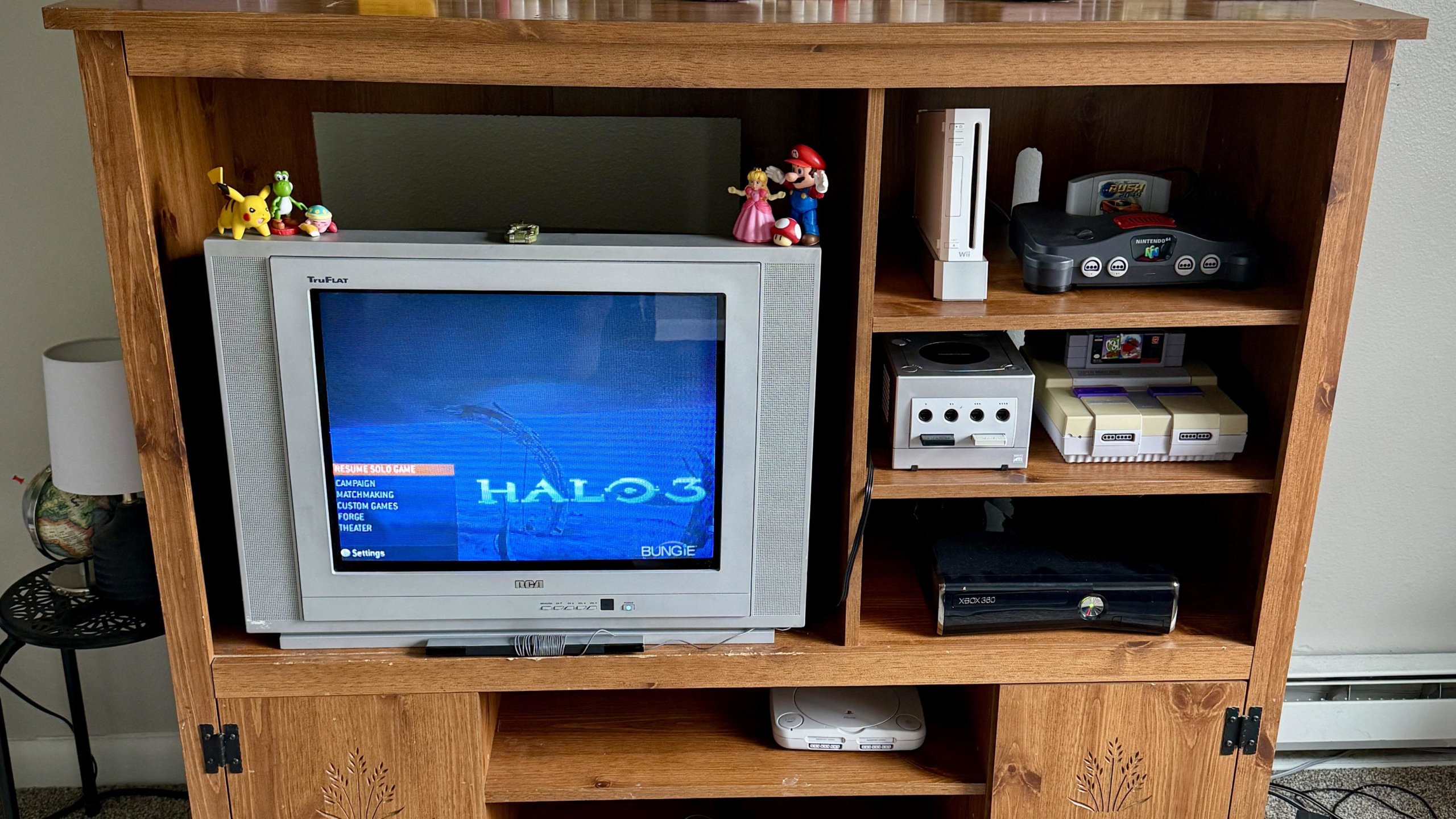
Consumer CRTs are the big, heavy tube televisions most of us grew up with (Sony Trinitron, Panasonic, Samsung, Toshiba, etc.). These are by far the most common and easiest to find in 2026. They usually offer large screen sizes (25–36 inches), good brightness, and that warm, nostalgic picture quality. For most retro gamers, a solid consumer CRT is more than enough and often the most practical choice. They’re cheaper, easier to move, and deliver that classic arcade/living-room feel.
Recommended models to look for:
- Sony Trinitron KV-27FS120 — the community favourite. Sharp tube, S-Video input, usually $20–$60 on Marketplace.
- Sony Trinitron KV-20M42 — compact 20-inch, great for desks. Easy to find under $30.
- Panasonic CT-27SL14 — solid alternative if Trinitrons are scarce locally. Good colour and component input.
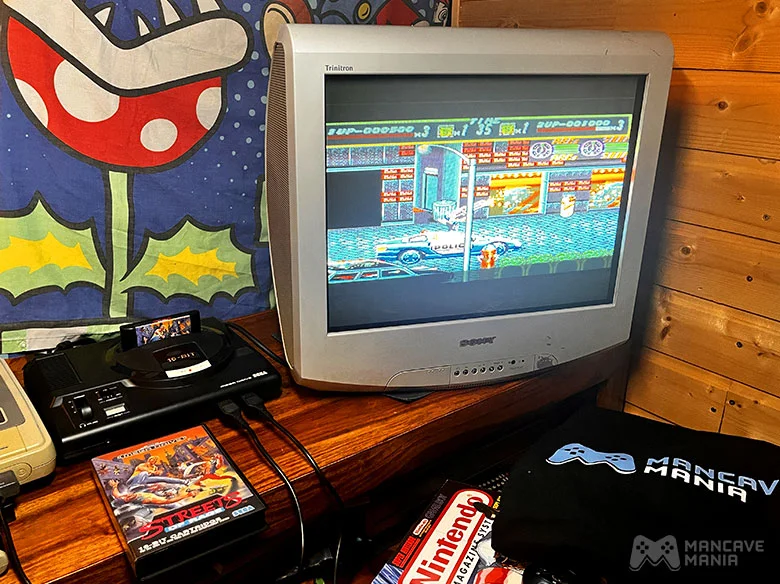
PVMs (Professional Video Monitors) were built for broadcast and video production studios. They are generally smaller (13–20 inches) but deliver noticeably sharper images, better convergence, and more accurate colors than regular consumer TVs. Many experienced retro gamers prefer PVMs because they strike an excellent balance between picture quality and practicality. The scanlines are crisp, colors pop, and the overall image feels more “premium” while still retaining that authentic CRT soul.
Recommended models to look for:
- Sony PVM-20M4U — most sought-after accessible PVM. 20-inch, RGB BNC inputs. Expect $150–$300.
- Sony PVM-14M4U — the 14-inch version. More affordable at $80–$150, popular for desk setups.
- JVC TM-A170G — good alternative when Sony PVMs are out of budget.
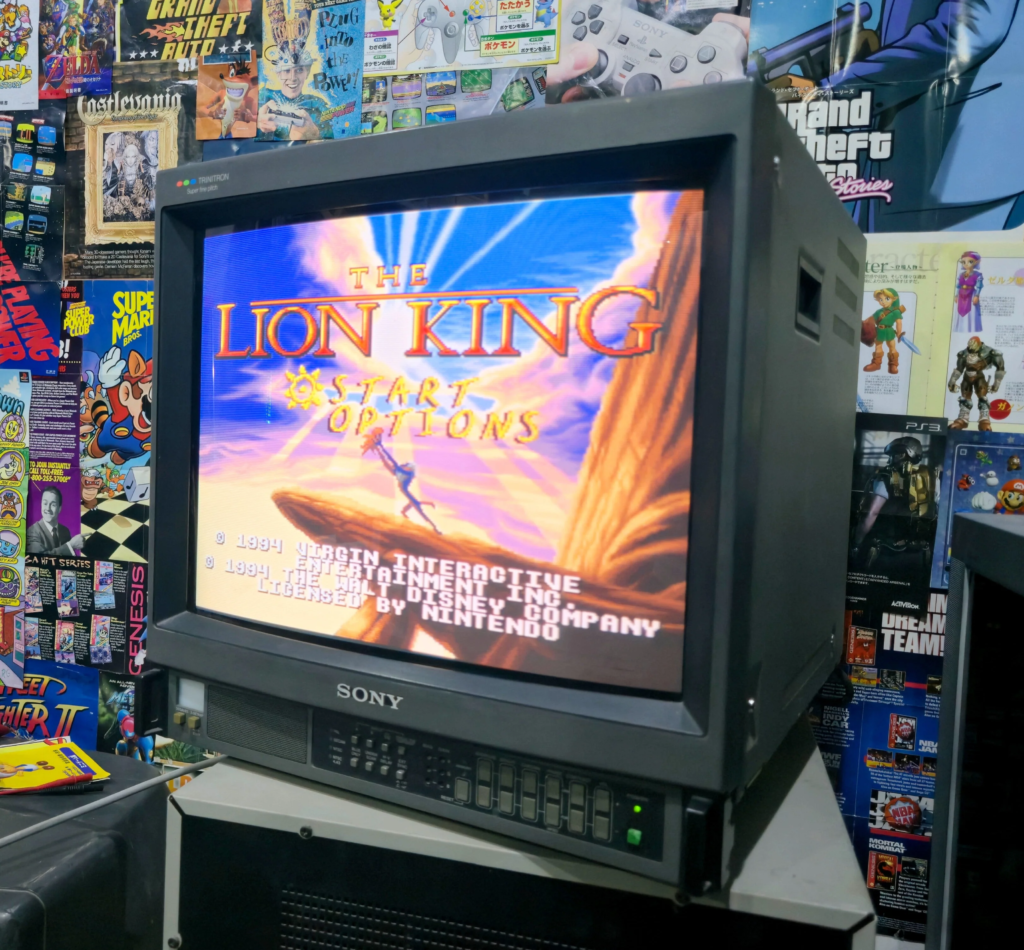
BVMs (Broadcast Video Monitors) sit at the very top of the CRT hierarchy. Technically what you would concider the best crt, these were the flagship professional monitors used in high-end studios and mastering facilities. BVMs offer the best possible sharpness, black levels, color accuracy, and geometry you can get from a CRT. They are the most sought-after monitors in the retro community, but they are also the rarest and most expensive. Owning a good working BVM is often considered “end-game” for serious retro gamers, but they are definitely not required to have an amazing experience.
Notable models:
- Sony BVM-D20F1U — the most famous BVM in the retro community. Exceptional sharpness. Prices $500–$2,000+.
- Sony BVM-A20F1U — analogue predecessor, slightly easier to find. Typically $400–$1,200.
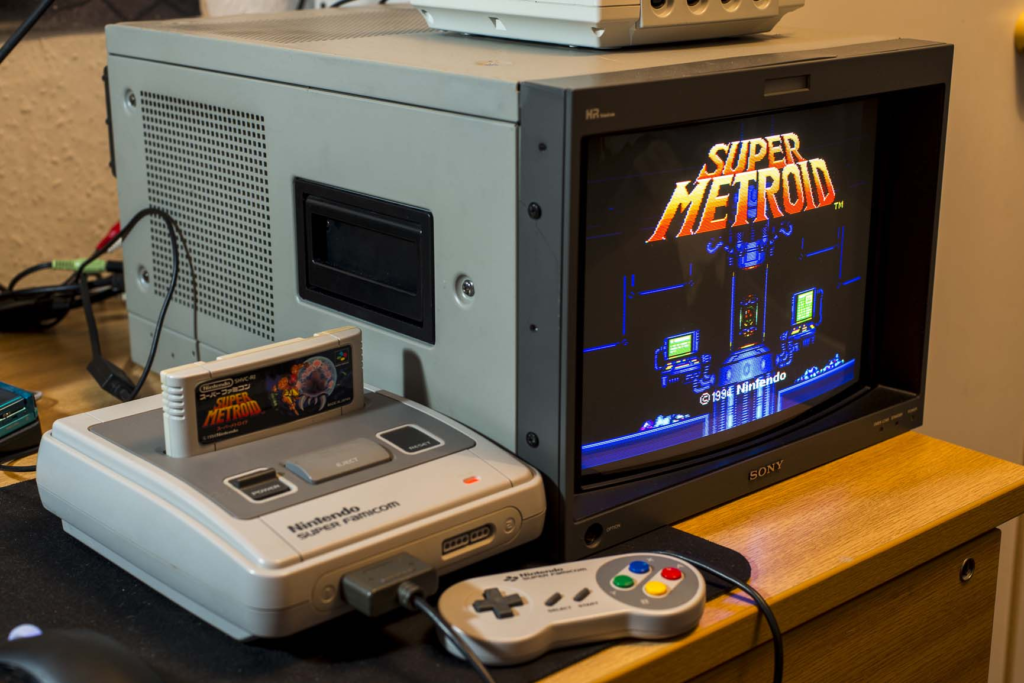
Where to Find The Best CRT TV for Retro Gaming in 2026
CRTs are no longer manufactured so you’re shopping second-hand. Here’s where to look:
- Facebook Marketplace — best source for free or cheap consumer CRTs. Many people just want them gone.
- eBay — better for PVMs and BVMs, though prices have risen. Check “sold” listings first to set expectations.
- Thrift stores — hit or miss, but Trinitrons still turn up for $5–$20 if you check regularly.
- r/crtgaming and r/retrogaming — active communities with buy/sell/trade threads.
- Local TV repair shops — some still hold old stock or know where units are. Worth a phone call.
How to Choose the Best CRT Screen for Your Setup in 2026
Start with your budget and available space. A good condition 27-inch consumer CRT can give you years of enjoyment and costs very little. But a 27-inch CRT can take up a lot of space, for most 20-inch is the sweet spot. If you want something more refined, look for a PVM, these you can often find for a reasonable price in the 14-inch range. Only chase a BVM if you have the budget and patience, they can be tricky to find in good working condition.
Key things to check when buying any CRT:
- Overall physical condition (no major scratches or dents)
- Picture geometry (straight lines, no major warping)
- Convergence (colors should line up properly)
- Input types (RGB, Component, or S-Video preferred)
- Brightness and focus quality
Many people in 2026 start with a cheap consumer set, fall in love with the experience, and later upgrade to a PVM or BVM. There really is no such thing as the best CRT TV for retro gaming, only the best one for you.
The most important thing is to actually start playing games on real hardware. Once you experience how incredible Super Mario World, Metal Gear Solid, or Jet Set Radio look and feel on a proper CRT Screen, you’ll understand why so many of us refuse to go back to modern displays.
For a console-specific breakdown, read our guide to the best CRT for SNES gaming.
Frequently Asked Questions
Choosing the best CRT TV for retro gaming comes down to three things: budget, space, and your console’s output
Is a PVM actually better than a consumer CRT for retro gaming?
Yes, noticeably — but mainly if your console supports RGB output. A PVM fed a Composite signal won’t look much better than a consumer TV. The upgrade matters most when paired with RGB via SCART or BNC. If your console can’t output RGB, start with a consumer CRT first.
What size CRT is best for retro gaming?
For console gaming at normal viewing distance, a 20–27 inch consumer CRT is the sweet spot. Anything over 32 inches can make 240p content look soft. For desk setups, a 14–20 inch PVM is ideal.
Do I need RGB to enjoy a CRT for retro gaming?
No — S-Video already looks significantly better than Composite and is available on most CRT TVs. RGB gives the sharpest image but requires the right cables and console support. Start with S-Video if you’re new.
Are CRT TVs still available to buy in 2026?
Yes, though supply is slowly shrinking. Consumer CRTs are still reasonably common on Facebook Marketplace, often free. PVMs have become harder to find locally and eBay prices have risen. The best time to buy was five years ago; the second best time is now.
What CRT should I buy for SNES, N64, or PS1?
For SNES and PS1, a 20-inch Sony Trinitron with S-Video is an excellent starting point. If you want the best image, pair either console with a PVM via RGB SCART. The N64 doesn’t natively output RGB without a mod, so S-Video into a consumer Trinitron is the practical choice for most people.
Final Advice: When it come to the best CRT TV for retro gaming, don’t wait for the “perfect” monitor. Do some shopping around and grab a decent working CRT to start enjoying your games the way they were meant to be played.
Now check out our buying guide to buy your first CRT with confidence!
