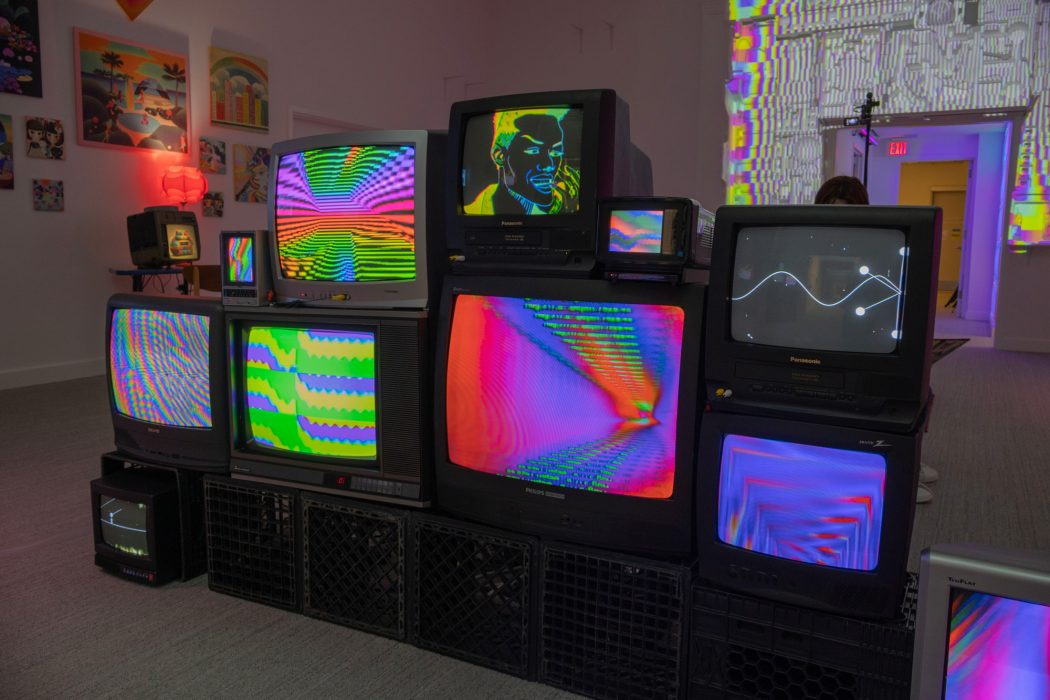
If you’re serious about retro gaming, you’ve almost certainly heard the term CRT praised as the holy grail of displays. But what exactly is a CRT? How does this decades-old technology still outperform modern screens for classic games in 2026? And is it worth the effort to hunt one down and maintain it?
Whether you are a curious newcomer asking what is a CRT for the first time, or a seasoned collector looking to go deeper — this guide covers everything.
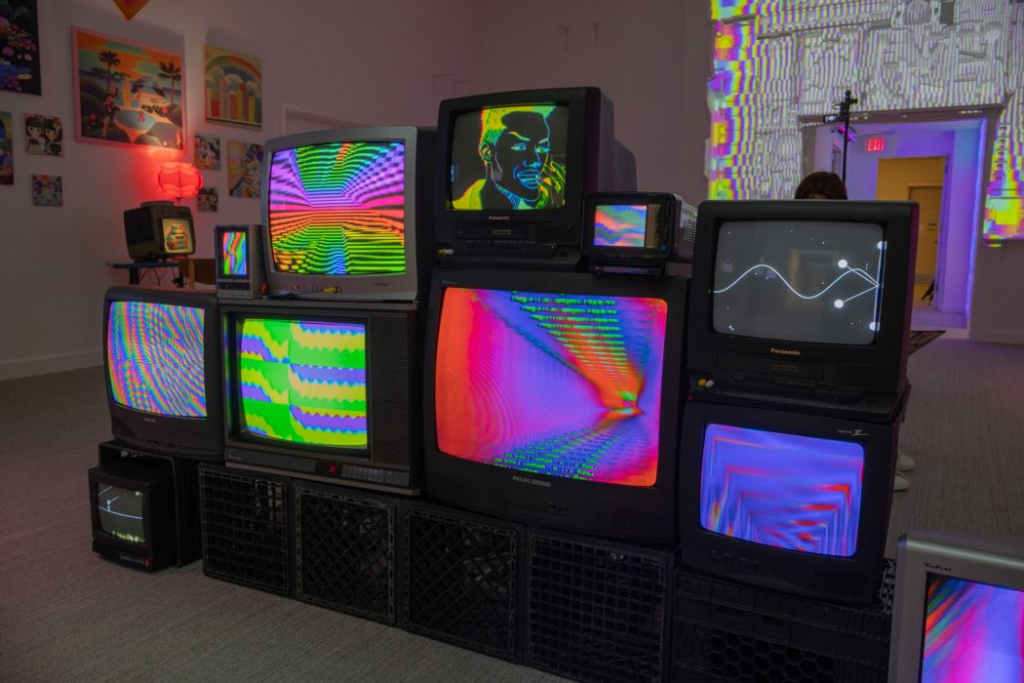
What does CRT stand for?
A CRT — or Cathode Ray Tube — is an analog vacuum tube display technology that was the dominant form of televisions and computer monitors from the 1930s until the mid-2000s. So what is a CRT exactly? It is a sealed glass vacuum tube that creates images by firing beams of electrons at a phosphor-coated screen — a continuous analog process completely unlike the fixed pixel grids used in modern LCD and OLED displays.
Unlike modern digital displays that use a fixed grid of pixels refreshed in discrete frames, a CRT creates images by firing beams of electrons at a phosphor-coated glass screen in a continuous analog process.
| Specification | Typical CRT values |
|---|---|
| Technology | Analog vacuum tube, electron beam |
| Input lag | ~0ms (virtually zero) |
| Refresh rate | 50–120Hz (variable, analog) |
| Native resolutions | 240p, 480i, 480p, 1080i and beyond |
| Operating voltage | 20,000 – 30,000 volts internally |
| Typical lifespan | 20,000 – 30,000 hours |
| Production ended | ~2007 (consumer), ~2012 (professional) |
| Weight range | 8kg (small) to 50kg+ (large consumer sets) |
How a CRT Actually Works – Deep Technical Explanation
Understanding how a CRT works helps explain why it still feels so special for retro gaming.
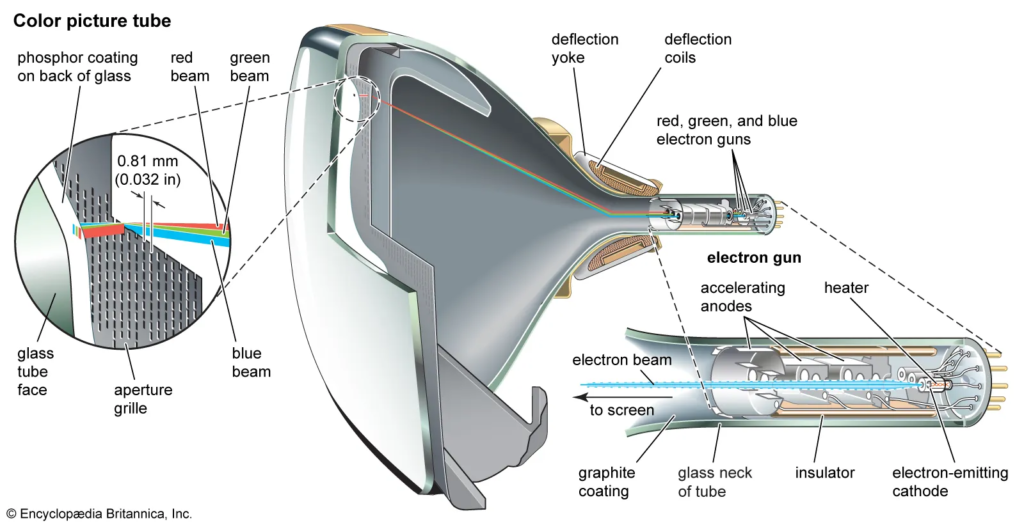
1. The Vacuum Tube Structure A CRT is essentially a large glass vacuum tube. At the back is the electron gun assembly, in the middle is the deflection yoke, and at the front is the phosphor screen.
2. Electron Generation Inside the electron gun, a heated cathode (a small metal filament) boils off electrons through thermionic emission. These electrons are then accelerated by a very high positive voltage (typically 20,000 to 30,000 volts) toward the screen.
3. Beam Focusing and Acceleration The electrons are focused into a tight beam using electrostatic or electromagnetic lenses. The higher the voltage, the brighter and sharper the image can be.
4. Magnetic Deflection (The Yoke) Surrounding the neck of the tube is the deflection yoke – a set of electromagnetic coils. By varying the current through these coils, the electron beam is rapidly deflected both horizontally and vertically. This scanning happens so fast (50–120 times per second) that it creates the illusion of a steady image.
5. The Phosphor Screen & Shadow Mask The inside of the front glass is coated with phosphors that glow when struck by electrons. In color CRTs, a shadow mask or aperture grille (a thin metal sheet with tiny holes) ensures the red, green, and blue electron beams hit only their corresponding phosphor dots.
6. Persistence and Decay One of the magical properties of CRTs is phosphor persistence – the glow doesn’t turn off instantly. This natural decay creates beautiful motion blending and eliminates the sample-and-hold motion blur common on modern LCDs.
This entire process is analog and continuous, which is why CRTs have such exceptional motion clarity and virtually zero input lag.
It’s really sad that these aren’t produced at all anymore, it would have been so facinating to see what these would have looked like with another 20 years of advancements.
What is a CRT good for in 2026 – and why do retro gamers still prefer them?
The technical advantages are significant:
- Zero Input Lag – The image is drawn directly by the electron beam with almost no processing delay.
- Infinite Contrast – When the beam is off, the screen is truly black.
- Perfect Motion Clarity – No motion blur or sample-and-hold effect.
- Natural Scanlines – Many retro games were designed with visible scanlines in mind.
- Variable Refresh Rates – CRTs can handle 240p, 480i, 480p, and higher without issues.
- The “CRT Glow” – Soft, organic light emission that feels alive.
Types of CRTs Used in Retro Gaming
1. Consumer CRT Televisions The most common and accessible option. Sizes from 14″ to 36″. Usually have RF, Composite, S-Video, and sometimes Component inputs. Excellent starter CRTs.
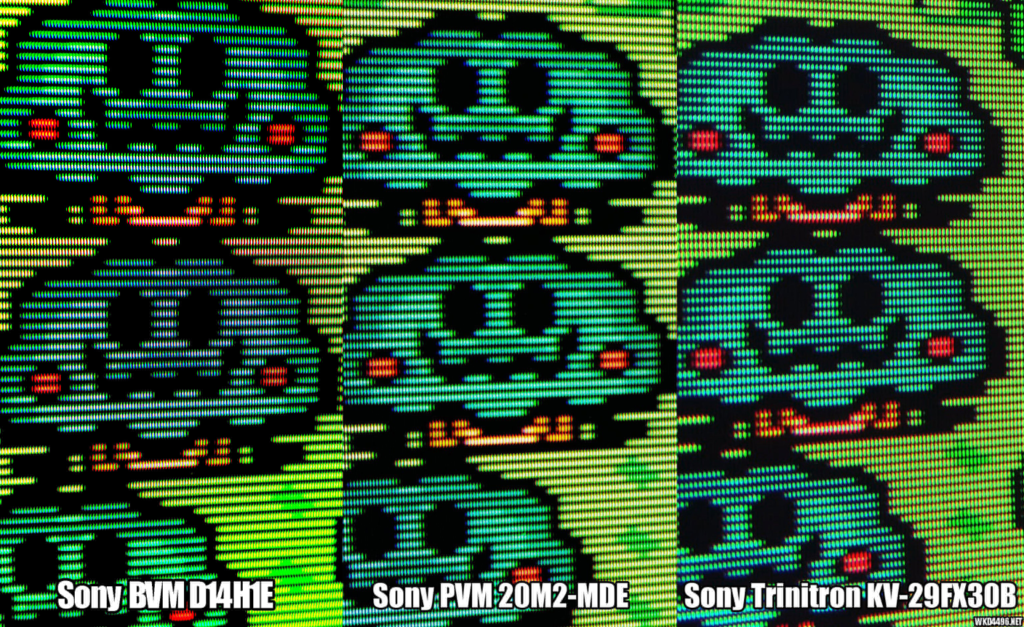
2. Professional Studio Monitors (PVM / BVM) Sony PVM and BVM lines are legendary in the retro community. Much sharper image, better convergence, more accurate colors, and professional-grade inputs. Smaller sizes (8–20 inch) but highly sought after.
3. Computer CRT Monitors Sony Trinitron, NEC MultiSync, ViewSonic, etc. Often excellent for PC emulation and higher resolutions. Some support 1080p and beyond.
Find out which is best for your needs here.
Pros and Cons of Using CRTs in 2026
Advantages
- Unmatched authenticity for retro games
- Extremely low input lag
- Beautiful natural scanlines and phosphor glow
- Relatively cheap if found locally
Disadvantages
- Heavy and bulky (major space issue)
- High power consumption
- Requires regular maintenance and calibration
- Harder to find good working units
- Risk of damage during transport
Is a CRT Still Worth It in 2026?
Yes – if authenticity is your top priority.
One of the most common questions we get alongside what is a CRT is whether they are actually worth tracking down in 2026 — the answer is yes, with some caveats.
For pure retro gaming (especially 4th to 6th generation consoles like SNES, Sega Genesis and PSX), a good CRT remains the best experience available. Many long-time retro gamers say that once they go back to retro, modern displays just don’t cut it anymore for classic games.
However, for small apartments, frequent moving, or playing a mix of old and new games, a modern monitor with good shaders is often more practical.
Check out how they compare.
Frequently Asked Questions – What is a CRT?
What does CRT stand for?
CRT stands for Cathode Ray Tube – the analog vacuum tube technology used in televisions and monitors from the 1930s until the mid-2000s. The cathode is a heated filament that emits electrons, which are fired at a phosphor-coated screen to create an image.
Why do retro gamers prefer CRT monitors?
CRTs offer three things modern displays still can’t fully replicate: virtually zero input lag, native support for 240p resolution, and natural scanlines that retro games were specifically designed around. The result is that classic games simply look and feel more authentic on a CRT than on any modern screen, even with shaders and upscalers.
Are CRTs still being made in 2026?
No — CRT production effectively ended in the mid-2000s as LCD panels became cheaper and thinner. All CRTs available today are second-hand units. Consumer CRTs can still be found relatively easily on Facebook Marketplace and at thrift stores, but professional-grade PVMs and BVMs are becoming increasingly rare and expensive.
What is the difference between a CRT TV and a CRT monitor?
A CRT TV is designed for analogue broadcast signals and typically accepts Composite, S-Video, or Component inputs. A CRT monitor is designed for computer use and accepts VGA or other PC signals, often supporting higher resolutions. For retro gaming, both have their uses – consumer CRT TVs are better for console gaming, while CRT monitors are preferred for PC emulation and arcade setups.
How long do CRTs last?
A well-maintained CRT can last 20,000–30,000 hours of use before the tube begins to noticeably dim. Many CRTs made in the 1990s are still going strong today. The main risks are physical damage during transport, capacitor failure on the internal boards, and burn-in from static images being displayed for extended periods.
Is a CRT dangerous?
CRTs operate at very high internal voltages – typically 20,000 to 30,000 volts – and can retain a dangerous charge even when unplugged. Never open a CRT casing unless you are a trained technician. For normal use as a gaming display, a CRT is completely safe. Just don’t drop one – the vacuum tube can implode under impact.
Final Thoughts
So what is a CRT in 2026? It’s more than just an old TV – it’s a masterpiece of analog engineering that delivers a visual and tactile experience that digital displays have yet to fully replicate.
Whether you go full retro, modern monitor, or hybrid, the most important thing is enjoying your games on hardware that feels right to you.
